
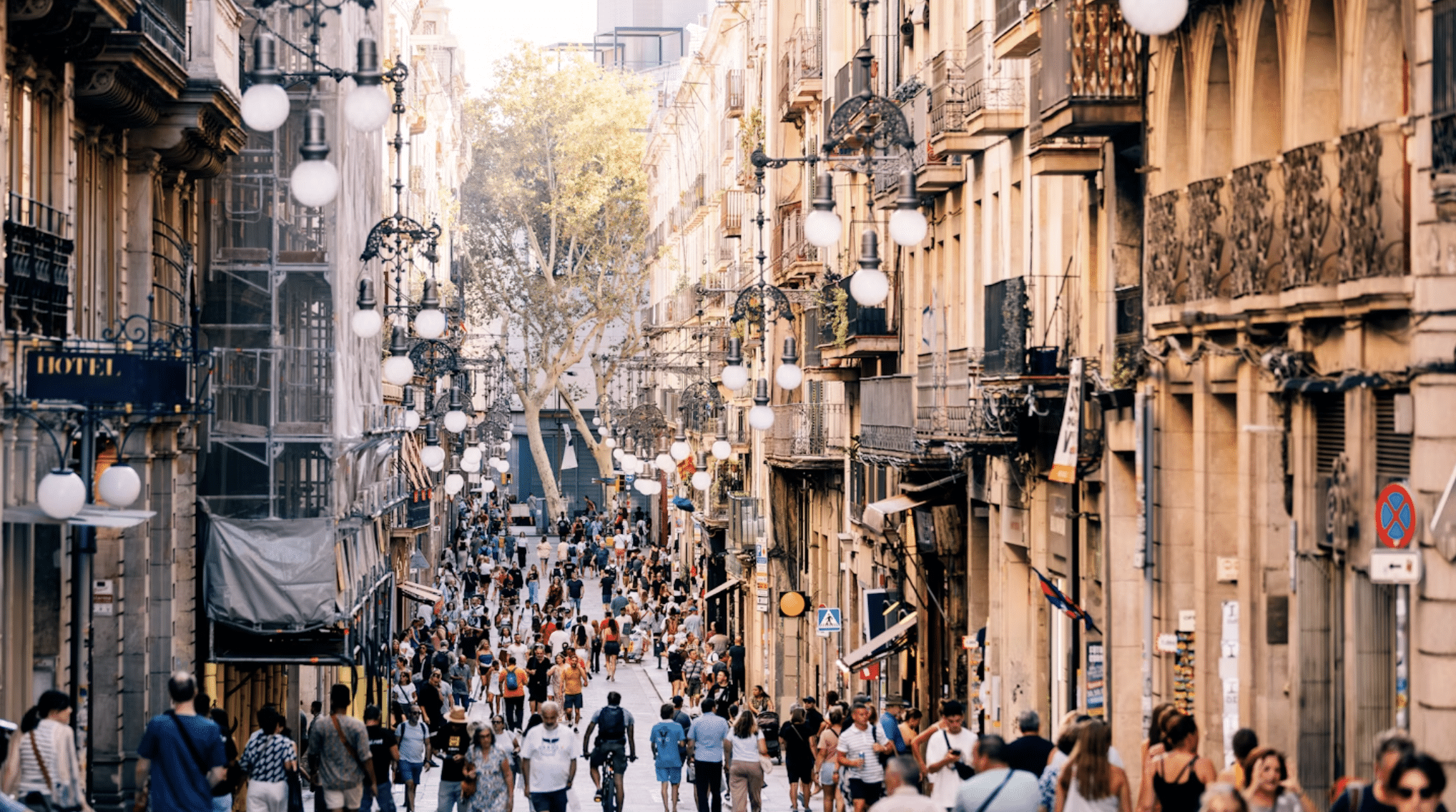
The phenomenon of overtourismUrban sprawl, which has strained cities like Barcelona, has been the central focus of debates on urban sustainability for years. However, a recent study by José Antonio Donaire Benito and Konstantina Zerva, funded by the project Ciconia, proposes a broader approach to understanding urban dynamics: total mobility (overall mobility).
The study reveals that pressure on cities stems not only from tourism, but also from the coexistence of multiple forms of mobility. Barcelona, a prime example of this reality, receives more than a million non-resident users daily, including tourists, commuters, day-trippers, students, and digital nomads. This diverse and simultaneous mobility transforms the city into a hypermobile space, where the flow of people determines social, economic, and territorial dynamics.
According to the authors, Barcelona welcomed 17 million tourists in 2019, but the number of daily visitors is even higher if day-trippers returning home or staying in nearby areas are included. This constant interaction between residents, tourists, and other users redefines urban boundaries, generating tensions in certain districts, such as Ciutat Vella, where tourism accounts for 22.1% of daily users. In contrast, in areas like the Eixample, commuting and metropolitan traffic are more prevalent.
The project Ciconia It emphasizes that the challenge is not only managing tourist overcrowding, but addressing mobility as a whole. This perspective allows for a better understanding of conflicts over space, gentrification, and resource saturation, and opens the door to new solutions that integrate sustainability, quality of life, and social equity in contemporary cities.